
Het verschil tussen de Syrische oud en andere ouds
De oorsprong van de oud gaat terug tot de oudheid. Het instrument werd van generatie op generatie doorgegeven en wordt nog altijd veel bespeeld. Tegenwoordig bestaan verschillende typen oud . De Arabische oud is een van de meest voorkomende en wordt verbonden met Noord-Afrika, Palestina, Libanon, Jordanië, Syrië, Irak, het Arabisch Schiereiland en Iran. In dit artikel bekijken we vooral de Syrische oud , die bekendstaat om zijn brede schakering aan klankkleuren. Dat is een van de belangrijkste eigenschappen die hem van andere modellen onderscheidt.
Onderzoek vóór aankoop zorgvuldig welk type oud bij u past. Geen twee instrumenten zijn volledig gelijk. Belangrijke verschillen tussen ouds zijn:
- Vorm
- Afmetingen
- Vakmanschap
- Materiaal
- Gewicht
- Duurzaamheid
- Klank
- Toets en hals
- Balans tussen de snaren
Over de oud

De geschiedenis van de oud gaat minstens 3.500 jaar terug. De Turkse oud verschilt in basisconstructie niet volledig van modellen uit andere landen, maar Arabische ouds hebben doorgaans een grotere klankkast. Ze hebben vaak één groot klankgat, terwijl Turkse modellen geregeld één groot en twee kleine klankgaten hebben. Op enkele aanpassingen na bleef de hoofdvorm van de oud ongeveer duizend jaar herkenbaar.
De oud is een fretloos snaarinstrument met een bereik van ongeveer drie octaven. De holle klankkast versterkt de trillingen van de getokkelde snaren en geeft het instrument zijn volle stem. De speler gebruikt een risha of plectrum. Voor de bouw worden sterke, duurzame houtsoorten zoals mahonie en haagbeuk gebruikt. Waar vroeger snaren van darm of omwikkeld materiaal voorkwamen, worden tegenwoordig veelal nylon en moderne omwonden snaren toegepast.
Misschien ook interessant: Hoe leert u effectief oud spelen?
Wat is een Syrische oud?

De Syrische oud behoort tot de Arabische oudfamilie en is een van de belangrijkste regionale varianten. Hij heeft doorgaans een middelgroot tot groot formaat en biedt een aantrekkelijke balans tussen de diepe Arabische klank en een duidelijke articulatie. Syrië kent bovendien een lange traditie van gerenommeerde oudmakers.
Welke andere typen oud bestaan er?
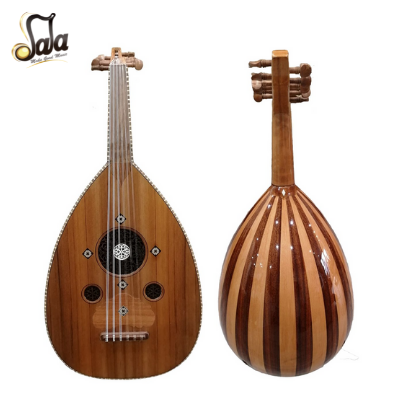
De twee brede hoofdfamilies zijn de Arabische en de Turkse oud. Binnen de Arabische familie bestaan verschillende regionale stijlen. Turkse en Arabische ouds hebben ieder herkenbare eigenschappen. Veelvoorkomende typen zijn:
Turkse oudDe Turkse oud heeft doorgaans een verfijnde, heldere klank en een relatief lichte bouw. De lage snaarhoogte en compacte afmetingen zorgen vaak voor comfortabel en wendbaar spel.
Arabische oud
Arabische ouds hebben meestal elf snaren en een dikker bovenblad en grotere klankkast dan Turkse modellen.
Syrische oud
De Syrische oud verenigt eigenschappen van Turkse en Arabische klankwerelden. Hij heeft vaak een krachtige, wat droge en directe toon en een middelgroot formaat.
Egyptische oud
De Egyptische oud klinkt doorgaans zwaar, diep en vol. Hij behoort tot de grootste regionale modellen en gebruikt vaak sparrenhout voor het bovenblad.
Marokkaanse oud
Dit is een minder vaak voorkomende regionale variant van de oud.
Perzische oud
Arabische ouds zijn doorgaans groot, Turkse kleiner en Perzische barbats middelgroot. De Perzische variant heeft een warme, vloeiende klank.
Elektrische oud
Elektrische ouds bestaan in meerdere vormen en hebben meestal een massieve of sterk gereduceerde klankkast.
Wat is het verschil tussen de Syrische oud en andere ouds?
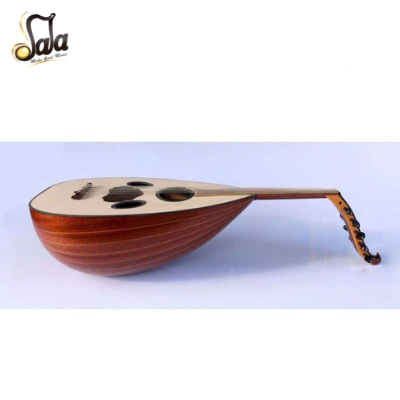
De Syrische oud is doorgaans langer en lager gestemd dan veel Turkse ouds. De klankkast heeft vaak een uitgesproken peervorm en ligt qua formaat tussen Turkse en grotere Egyptische modellen. Egyptische ouds zijn geregeld rijker versierd, terwijl Syrische instrumenten vooral worden gewaardeerd om hun brede klankpalet, krachtige projectie en combinatie van diepte en helderheid.
Sala Muzik helpt u graag met deskundige informatie en een zorgvuldig gekozen assortiment. Bekijk onze producten en volg ons voor meer informatie.
Misschien ook interessant: De geschiedenis van de oud


Good Afternoon Mr. Moran,
Thank you for reaching out with your inquiry about finding the perfect oud. It’s great to hear about your interest in exploring different styles beyond your Turkish oud.
Regarding the choice between Syrian, Iraqi, and Persian ouds, each has its unique qualities in terms of tone, timbre, and resonance. Typically, Syrian ouds are known for their warm, rich sound with excellent volume, making them very resonant. Persian ouds often exhibit a bright and clear tone, suitable for intricate melodic lines. Iraqi ouds, distinct for their floating bridges, offer a dynamic range of sound and allow for subtle tonal adjustments, which can enhance the instrument’s expressiveness. The floating bridge, indeed, adds a unique character by providing more vibration freedom, thus enriching the sustain and clarity of each note.
With a budget of £800, you are indeed in a good position to acquire a high-quality, professionally set up oud. The instrument I recommend, the Premium Arabic Oud Sala A9, falls within your budget and meets the criteria you described. It is hand-assembled and carefully checked to ensure a beautiful setup and sound. You can view and consider this model here: Premium Arabic Oud Sala A9.
https://salamuzik.com/products/premium-arabic-oud-sala-a9
As for the wood choices, each type offers different attributes:
Walnut: Known for its balanced tone, provides a warm yet bright sound.
Apricot: Rarely used but offers a lighter, very resonant tone.
Pamela: This wood is not commonly used in oud construction; perhaps you meant Padauk, which offers a rich and warm sound.
Cocobolo: Delivers deep and powerful tones with excellent sustain.
Purpleheart: Known for its density and stiffness, provides a vibrant and resonant sound.
For the soundboard, AAA cedar is an excellent choice known for its warm and clear sound, enhancing the oud’s overall tonality. An ebony fretboard and pegs not only add aesthetic value but also contribute to the clarity of the sound, thanks to ebony’s dense nature.
Please let me know if you need any more details or if there’s anything else I can assist you with. I’m here to help ensure you find an instrument that meets your artistic needs and inspires your music.
Kind regards
info@salamuzik.com
Good Afternoon, I wonder if you are able to help?
I am looking to buy an Arabic oud, and am thinking of getting either a Syrian, an Iraqi, or a Persian oud. Which would you say has the better range in tone, timbre, and sounds, and which has the most resonance and volume? (I already have a Turkish oud).
Also, does the Persian oud always have a floating bridge, and if so, is this a good thing improving the instrument? How does this affect the sound in contrast to a fixed bridge?
I am looking for a powerful Arabic sounding instrument, with lovely clear tonal ranges with sustain.
My budget is £800 UK sterling (US$950). Will I find a high quality hand assembled, beautifully set up and checked, professional instrument for this price? What are my options?
Lastly, I have also been looking at woods. Ideally I would like an ebony fretboard and pegs. For the sound board I am considering AAA cedar.
For the body I am unsure. What are your opinions of, and how would you describe the character of the following possibilities: Walnut; Apricot; Pamela; Cocobolo; Purpleheart woods?
Any advice would be very much appreciated.
Thank you.
Kind regards,
David Moran (UK)
The Strings are Nylon like a Classical Guitar so the tension will be fairly low. I find that Machine Head tuners are more practical than friction pegs cause w/ that many strings to keep in tune, Machine heads make a big difference. A built in tuner on an Oud also rocks because Nylon strings take a while to stretch, so it helps w/ tuning it to pitch.
I would like to add that the Moroccan ouds, besides the fact of being rare, are the direct descendant of the Andalusian oud developed by Ziryab starting from Oud Ramal, which could only be found in Andalusia (Spain) and northern Morocco.
The development of the modern Moroccan Oud through the centuries borrowed innovative wood working techniques from Italy, Greece, Germany and, of course, Turkey, Egypt, Syria, Iraq, and most of the middle-east. And in return new Oud architectures were exported to serve as a basis for other modern incarnations in the Oud playing countries.
The main characteristics of modern Moroccan Ouds can be summarized as follows:
- Tone versatility. The Moroccan Oud makers mastered the equalization techniques using innovative approaches to the structure.
- High power. The typical Moroccan Oud is a few decibels louder than its oroental counterparts.
- Higher basses without being “muddy”
- Excellent playability
- Wide choice of woods that the makers know how to handle
- Easy access to the best of the best of Moroccan walnut for the bowl, which is by far the most sought after material by professional recording artists.
- Tested and adopted by a wide range of famous artists, such as Said Chraibi, Farid Al Artrash, Mohamad Abd El Wahab, Tantawi, and many other professional artists and collectors.
I would like to see more Ouds from Morocco at Sala Muzik so our brothers and cousins around the world can enjoy this unique 10 centuries craftsmanship.
Laat een reactie achter